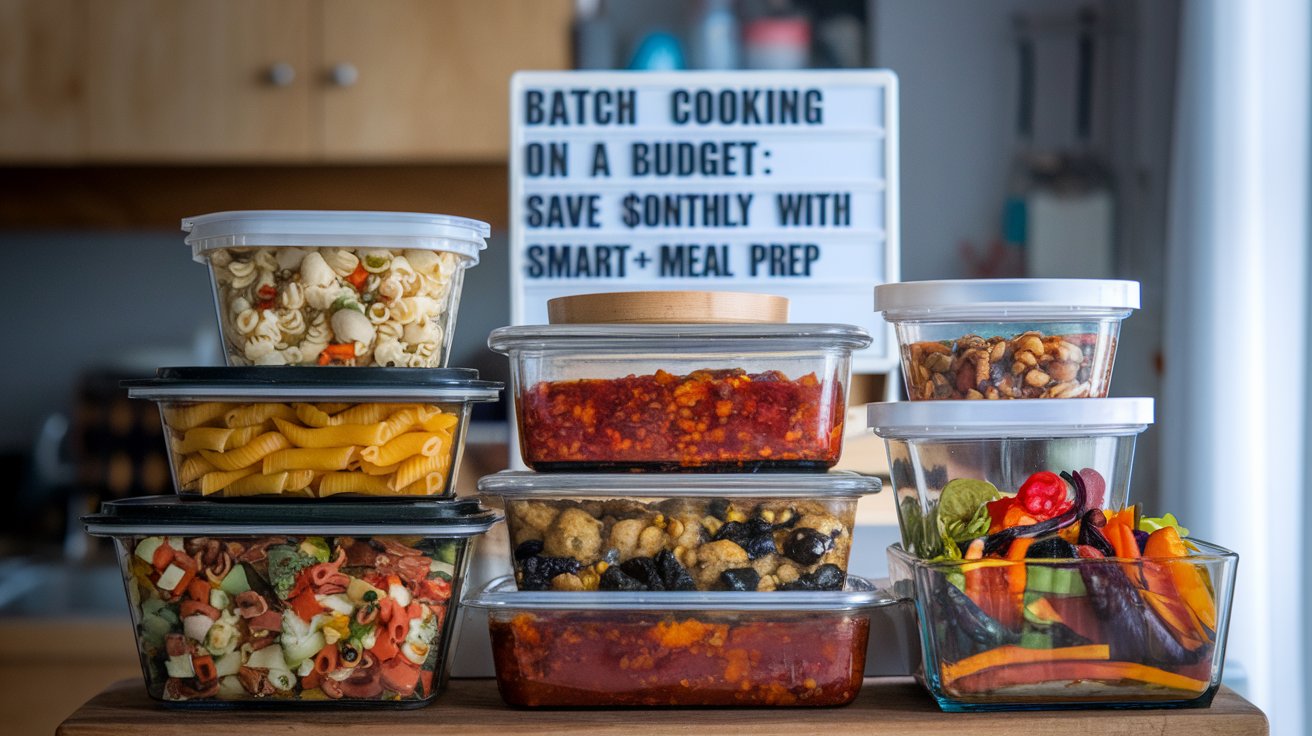
Batch cooking on a budget transforms your kitchen into a money-saving powerhouse, helping American families reduce food expenses by up to $200 per month while eating healthier meals. This strategic approach combines bulk purchasing power with efficient meal preparation, allowing you to create nutritious dishes for under $2 per serving while minimizing food waste and takeout temptation.
Why Batch Cooking on a Budget Saves Money: 7 Financial Benefits
Understanding the financial impact of batch cooking on a budget reveals why millions of Americans embrace this meal preparation strategy. According to USDA data from 2024, the average American household spends $7,729 annually on food, with nearly 40% wasted due to poor planning and impulse purchases.
Batch cooking addresses these costly inefficiencies by leveraging economies of scale and strategic meal planning. Families practicing budget batch cooking report average monthly savings ranging from $150 to $300, depending on household size and previous spending habits.
Bulk Purchasing Power Reduces Cost Per Serving
The foundation of batch cooking on a budget lies in bulk purchasing power, where buying larger quantities dramatically reduces per-unit costs. Rice purchased in 20-pound bags costs approximately $0.60 per pound versus $1.20 for smaller packages, while dried beans in bulk average $1.50 per pound compared to $2.50 for canned varieties.
Eliminate Food Waste Through Strategic Planning
Strategic meal planning through batch cooking eliminates the $1,500 average American families waste annually on spoiled food. When you prepare complete meals in bulk, every ingredient serves a purpose, and proper portioning ensures nothing gets forgotten in the refrigerator until it spoils.
Reduce Takeout Temptation with Ready Meals
Having healthy batch cooking recipes ready in your freezer eliminates the $3,000+ average Americans spend annually on restaurant meals and takeout. When nutritious, homemade meals require only reheating, the convenience factor rivals fast food while costing 70% less per serving.
Essential Budget-Friendly Ingredients for Batch Cooking
Successful batch cooking on a budget recipes rely on versatile, affordable ingredients that provide maximum nutrition per dollar spent. Focus on pantry staples that store well, cook efficiently in large quantities, and adapt to multiple cuisine styles throughout the week.
The most cost-effective batch cooking ingredients include dried legumes ($1-2 per pound), whole grains like brown rice and oats ($0.50-1 per pound), seasonal vegetables purchased in bulk, and affordable protein sources like chicken thighs, ground turkey, and eggs.
Protein Sources Under $3 Per Pound
Smart protein selection drives budget success in batch cooking, with chicken thighs averaging $1.50 per pound, ground turkey at $2.50, and dried beans providing complete proteins for under $2 per pound. These affordable options create satisfying, nutritious meals when prepared in large batches.
Versatile Grains and Legumes for Maximum Value
Building your batch cooking meal plan around versatile grains and legumes maximizes both nutritional value and cost savings. Brown rice, quinoa, lentils, and black beans serve as foundation ingredients that adapt to countless recipes while providing fiber, protein, and essential nutrients for pennies per serving.
What is the Cheapest Meal to Make in Bulk
The cheapest meal to make in bulk combines rice, beans, and seasonal vegetables, creating nutritious servings for under $1 each. This foundational recipe adapts to countless variations while providing complete proteins and essential nutrients that rival expensive restaurant meals.
Rice and bean combinations represent the ultimate budget-friendly batch cooking solution, with dried ingredients costing approximately $0.40 per serving before vegetables and seasonings. These meals freeze beautifully, reheat perfectly, and satisfy hunger while supporting long-term health goals.
Top 5 Budget Batch Cooking Recipes Under $2 Per Serving
These proven batch cooking recipes demonstrate how strategic ingredient selection creates delicious, nutritious meals that cost significantly less than restaurant alternatives while providing better nutrition and portion control.
Each recipe scales easily to feed families of various sizes, freezes well for future convenience, and adapts to dietary preferences without compromising the budget advantage that makes batch cooking so financially attractive.
Hearty Lentil and Vegetable Stew ($1.25 per serving)
This protein-packed healthy batch cooking recipe combines red lentils, diced tomatoes, carrots, and onions in a savory broth that serves 12 portions. The total ingredient cost averages $15, creating nutritious meals that provide 15 grams of protein and 8 grams of fiber per serving.
Chicken and Rice Casserole ($1.75 per serving)
Using affordable chicken thighs, brown rice, and frozen vegetables, this batch cooking recipe creates 10 generous portions for approximately $17. The combination provides complete nutrition while appealing to family members of all ages, making it ideal for meal planning success.
Bean and Vegetable Chili ($0.95 per serving)
This budget champion uses dried beans, canned tomatoes, and seasonal vegetables to create 14 servings for under $14 total. The high fiber and protein content keeps families satisfied while the bold flavors ensure nobody misses expensive restaurant alternatives.
Batch Cooking for Beginners: Essential Equipment and Setup
Starting your batch cooking for beginners journey requires minimal equipment investment, focusing on large-capacity cookware and proper storage solutions that maximize efficiency without breaking your budget. Most essential tools cost under $100 total and last for years of regular use.
The key to successful batch cooking lies in proper organization and workflow planning, not expensive gadgets. A large slow cooker, quality food storage containers, and basic prep tools create the foundation for sustainable meal preparation that saves both time and money long-term.
Essential Cookware for Large-Batch Preparation
Invest in a 6-8 quart slow cooker ($40-60), large stock pot ($30-50), and quality sheet pans ($20-30) to handle most batch cooking recipes efficiently. These versatile tools accommodate family-sized portions while maintaining even cooking temperatures throughout large batches.
Food Storage Solutions That Prevent Waste
Proper storage extends the value of your batch cooking on a budget efforts, with glass containers and freezer-safe bags preserving meals for 3-6 months. Label everything with contents and dates to maintain quality and prevent costly waste of your meal preparation efforts.
Healthy Batch Cooking Recipes for Freezing Success
Mastering healthy batch cooking recipes for freezing ensures your meal preparation efforts maintain nutritional value and appealing textures after storage. Certain ingredients and cooking methods freeze better than others, making recipe selection crucial for long-term success.
Focus on recipes with stable ingredients like cooked grains, legumes, and properly prepared proteins that maintain quality during freezing and reheating processes. Avoid dairy-heavy dishes and fresh herbs that deteriorate during freezer storage, compromising both taste and nutritional value.
Creating Your Weekly Batch Cooking Meal Plan
Developing an effective batch cooking meal plan requires strategic thinking about family preferences, nutritional needs, and ingredient overlap that maximizes both convenience and cost savings. Plan for 7-10 different meals that provide variety while using similar base ingredients.
Successful meal planning incorporates seasonal ingredient availability, sale prices at local stores, and family schedule considerations that influence when specific meals work best. This strategic approach ensures your budget batch cooking efforts align with real-life needs and preferences.
Related video about batch cooking on a budget
This video complements the article information with a practical visual demonstration.
What you should know
What is the cheapest meal to make in bulk?
The cheapest bulk meal combines rice, dried beans, and seasonal vegetables, costing under $1 per serving. This combination provides complete proteins, essential nutrients, and satisfying portions while using ingredients that store well and reheat perfectly. Add different spices and seasonings to create variety throughout the week.
Is it cheaper to cook in bulk?
Yes, cooking in bulk reduces food costs by 40-60% compared to individual meal preparation or restaurant dining. Bulk purchasing power, reduced food waste, elimination of takeout temptation, and efficient use of cooking energy all contribute to significant monthly savings averaging $150-300 for typical families.
What’s a good meal to batch cook?
Lentil and vegetable stew makes an excellent batch cooking choice because it’s nutritious, costs under $1.50 per serving, freezes well for 6 months, and adapts to different flavor profiles. The high protein and fiber content keeps families satisfied while the simple preparation process works for beginners.
How long do batch cooked meals last in the freezer?
Most properly stored batch cooked meals maintain quality for 3-6 months in the freezer when stored in airtight containers or vacuum-sealed bags. Cooked grains, legumes, and casseroles freeze particularly well, while dairy-based dishes should be consumed within 2-3 months for best texture and flavor.
What equipment do I need to start batch cooking on a budget?
Essential budget batch cooking equipment includes a large slow cooker ($40-60), 8-quart stock pot ($30-50), quality food storage containers ($30-40), and basic prep tools. This $100-150 investment provides everything needed to prepare family-sized batches efficiently while maintaining food safety standards.
| Budget Strategy | Monthly Savings | Implementation Difficulty |
|---|---|---|
| Bulk Ingredient Purchasing | $50-80 | Easy |
| Eliminating Food Waste | $75-125 | Moderate |
| Reducing Takeout Orders | $100-200 | Moderate |
| Strategic Meal Planning | $40-70 | Easy |

